A Catholic Historical Novel
Sinner and SaintBecoming Patrick
Before he could become Ireland’s apostle, Patrick had to survive becoming himself.
Kidnapped from fifth-century Britannia and sold into Irish slavery, a proud young man must reclaim his faith, his identity, and his humanity—only to discover that freedom may require him to return to the land that broke him.
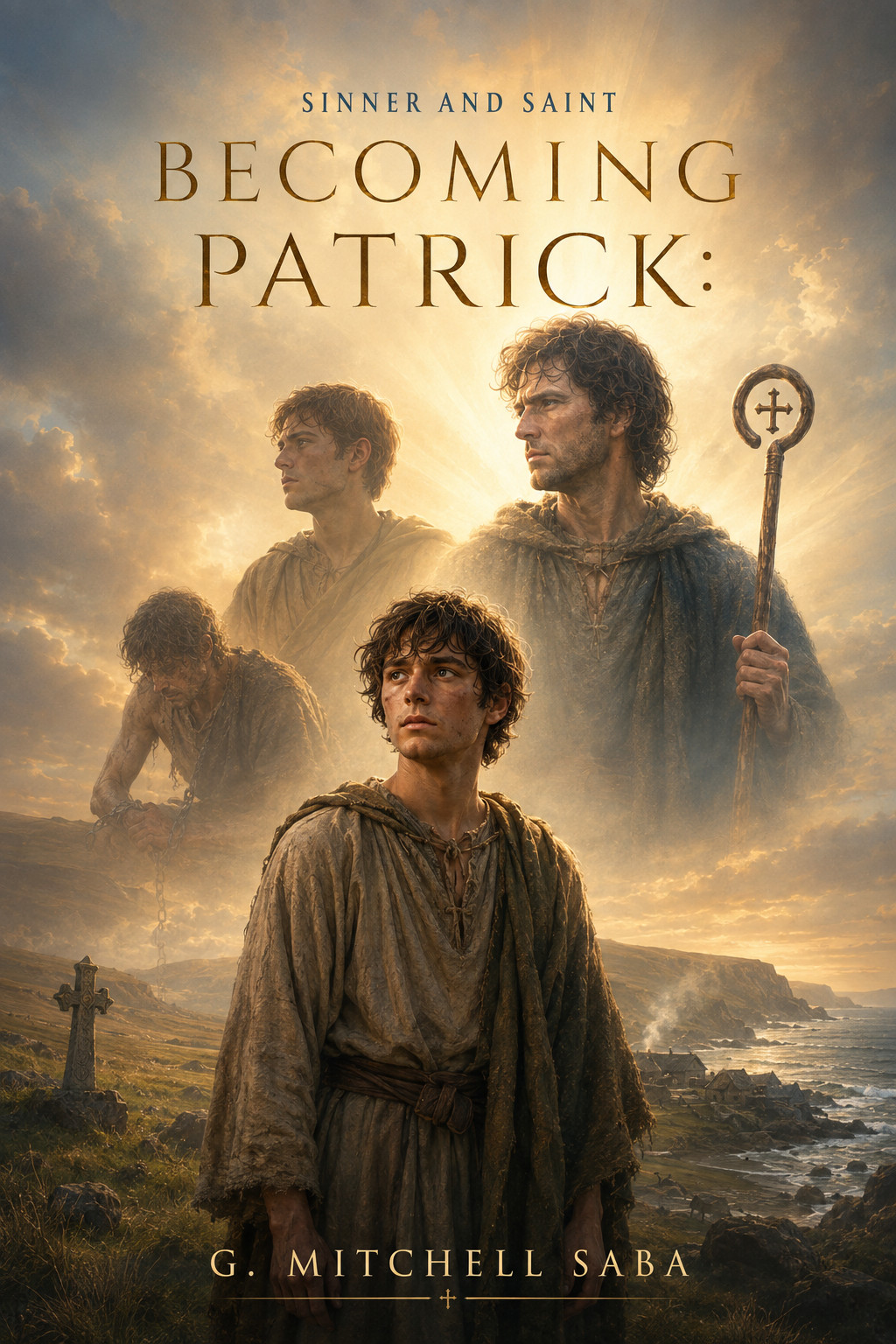
The Man Before the Saint
The legend began with a boy in chains.
Long before the bishop’s crook, the mission, and the stories told in his name, Patrick was Paternus: proud, restless, spiritually indifferent—and young enough to believe danger belonged to someone else.
When Irish raiders tear him from his family and sell him into slavery, everything that once defined him begins to disappear. Home. Privilege. Freedom. Even his name. On the cold hills of Ireland, prayer becomes his last possession—something no master can reach unless he gives it away.
After six years, a voice in the night commands him to flee. Yet reaching home does not make him whole. The faces of those left behind still follow him, and so does a terrifying possibility: the God who delivered him from Ireland may be calling him back.
The Hidden Road
A captive. A fugitive. A man sent.
This is not the story of a saint arriving fully formed. It is the story of captivity, failure, waiting, and mercy—the long formation that made the mission possible.
The Captive
Stripped of home and identity, Patrick learns that survival is not the same as remaining human.
The Fugitive
A voice commands him to run, but freedom brings guilt, anger, and the harder work of forgiveness.
The Man Sent
Years of discipline prepare him to return—not in triumph, but in obedience—to the land that once owned him.
He spent six years trying to escape Ireland. Then God called him back.Becoming Patrick: Sinner and Saint
Read the Opening
The river did not ask permission to keep moving.
The novel opens beside the Clyde, where a restless boy believes the world can still be commanded—and where the first warning of what is coming rises as smoke beyond the trees.
It slid past the settlement with the same stubborn patience it had before the Romans came, before roads had been stitched across the land like seams, before men learned to call themselves civilized because they could tax a loaf of bread.
The Clyde was older than their arguments. It carried reeds, silt, and the occasional dead branch down toward the sea, and if you watched long enough, you began to understand something that no sermon could quite say: the world did not revolve around your small will.
Paternus son of Calpornius did not watch long enough.
A Reader’s Map
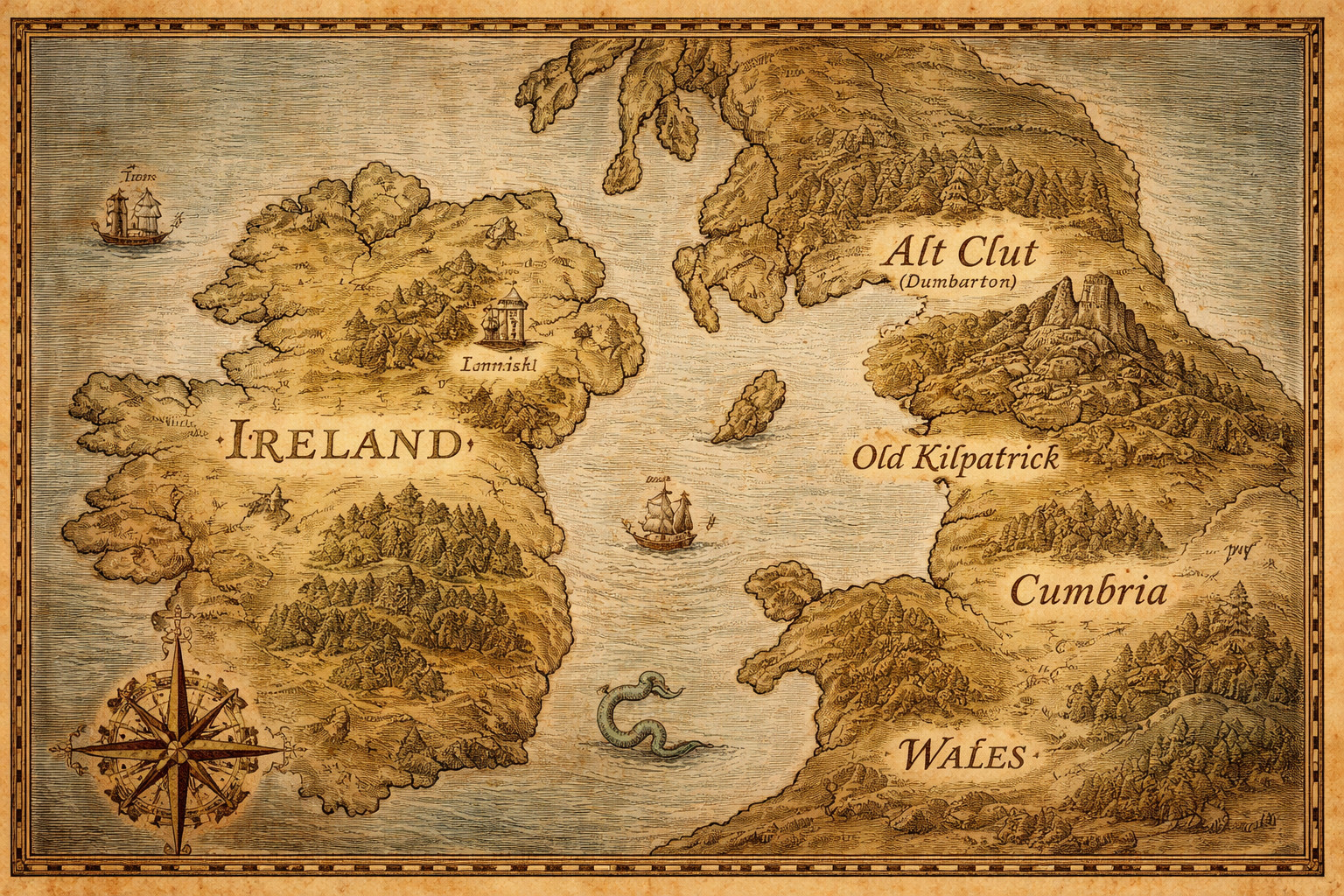
Patrick’s world was divided by a narrow, dangerous sea.
Merchants crossed it. Raiders crossed it. Captives crossed it. Missionaries crossed it.
Patrick first crossed in ropes. Years later, he would cross carrying a shepherd’s crook and the burden of those he could not forget.
The map is an imaginative guide to the novel rather than a precise modern reconstruction of fifth-century geography.
For Readers
For those who want the human being beneath the halo.
- Readers of Catholic and Christian historical fiction
- Readers drawn to Ireland, ancient Britain, and early Christianity
- Book clubs exploring faith, trauma, forgiveness, and vocation
- Readers who prefer spiritual depth without easy answers
- Anyone who has wondered how an imperfect person becomes capable of holy work
Follow the Journey
Publication news, first access, and stories behind the novel.
Join readers at The Write Calling for publication updates, launch information, historical notes, excerpts, and future fiction from G. Mitchell Saba.
No green hats. No lucky charms. Just the story before the legend.